
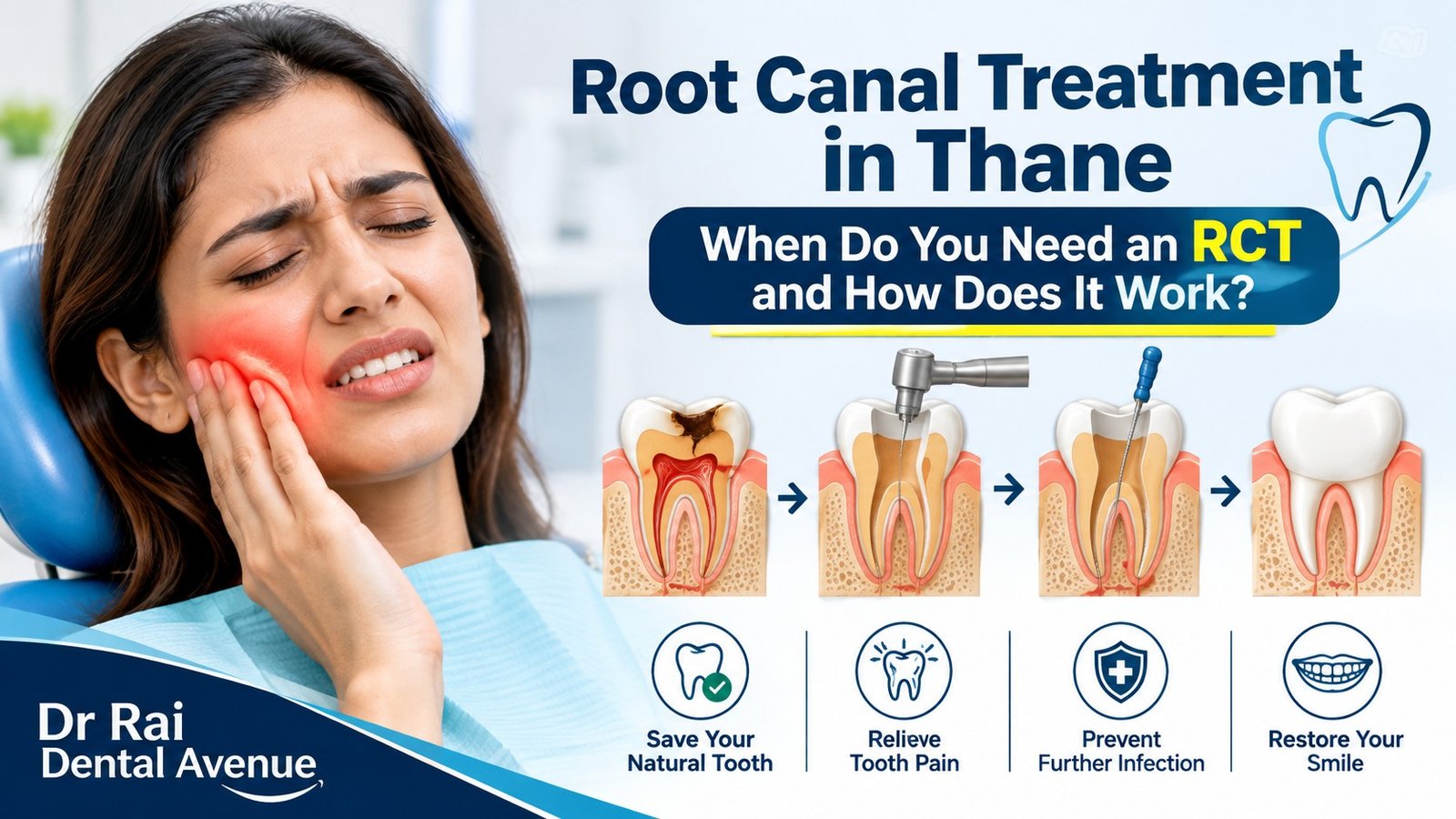
Persistent tooth pain, sensitivity to hot or cold foods, or discomfort while chewing can sometimes indicate an infection inside your tooth. When the infection reaches the dental pulp, Root Canal Treatment in Thane may be recommended to remove the infection, relieve discomfort, and preserve your natural tooth. At Dr Rai Dental Avenue, patients receive a detailed dental evaluation to identify the cause of tooth pain and determine whether root canal treatment, re-root canal treatment, or another dental procedure is required. With modern dental techniques and appropriate local anaesthesia, root canal treatment can be performed comfortably while helping preserve your natural teeth.
Persistent tooth pain, sensitivity to hot or cold foods, or discomfort while chewing can sometimes indicate an infection inside your tooth. When the infection reaches the dental pulp, Root Canal Treatment in Thane may be recommended to remove the infection, relieve discomfort, and preserve your natural tooth.
At Dr Rai Dental Avenue, patients receive a detailed dental evaluation to identify the cause of tooth pain and determine whether root canal treatment, re-root canal treatment, or another dental procedure is required.
With modern dental techniques and appropriate local anaesthesia, root canal treatment can be performed comfortably while helping preserve your natural teeth.
What Is Root Canal Treatment?
Root canal treatment (RCT) is a dental procedure used to treat infection, inflammation, or damage inside a tooth.
The dental pulp is the soft tissue inside the tooth containing nerves and blood vessels. When it becomes infected or irreversibly inflamed, root canal treatment may be necessary.
During the procedure, the dentist:
Removes infected or inflamed dental pulp.
Cleans and shapes the root canals.
Disinfects the canals to reduce bacteria.
Fills and seals the cleaned canals.
Restores the tooth with an appropriate filling or crown.
The primary goal of RCT is to preserve the natural tooth, control infection, relieve discomfort, and restore normal dental function.
The dentist may recommend a dental crown after treatment depending on the amount of remaining tooth structure and the tooth's condition.
When Do You Need Root Canal Treatment?
Not every toothache requires a root canal. However, certain symptoms may indicate that infection or inflammation has reached the dental pulp.
You may need RCT if you experience:
Persistent or severe toothache.
Long-lasting sensitivity to hot or cold foods.
Pain while biting or chewing.
Swelling around the affected tooth.
Recurring dental abscess or pus.
Tooth discolouration.
Deep tooth decay.
A cracked or damaged tooth.
Previous injury or trauma to the tooth.
In some cases, an infected tooth may cause little or no pain. This is why a dental examination and X-ray are important before deciding whether root canal treatment is necessary.
At Dr Rai Dental Avenue, the dentist evaluates the affected tooth, identifies the underlying problem, and recommends an appropriate treatment plan.
How Does Root Canal Treatment Work?
The exact procedure depends on the affected tooth, the severity of infection, and the complexity of its root canal system.
Generally, root canal treatment involves the following steps.
1. Dental Examination
The dentist examines your tooth and may recommend an X-ray to assess the infection and understand the number, position, and shape of the root canals.
2. Local Anaesthesia
Local anaesthesia is administered to numb the area around the affected tooth.
This helps make the procedure comfortable. The dentist will also consider your dental condition and pain-management requirements.
3. Accessing the Tooth
A small opening is created in the tooth to reach the infected or inflamed pulp.
4. Cleaning the Root Canals
The infected pulp is carefully removed. The root canals are then cleaned, shaped, and disinfected to reduce bacteria and infection.
5. Filling and Sealing
Once the canals are thoroughly cleaned, they are filled with a suitable dental material and sealed to help prevent reinfection.
6. Restoring the Tooth
After root canal treatment, the tooth may require a filling or dental crown depending on how much natural tooth structure remains.
A crown may be recommended for teeth that have lost significant structure because it helps protect the treated tooth from further damage.
What Is a Painless Root Canal Treatment?
A painless root canal generally refers to an RCT performed using appropriate local anaesthesia and modern dental techniques to minimise discomfort.
Patients should not normally experience sharp pain during treatment when the affected area is adequately numbed. Some pressure or vibration may still be felt.
At Dr Rai Dental Avenue, your dentist can discuss your concerns before the procedure and explain the pain-management options available.
If you are searching for painless root canal treatment in Thane, remember that patient comfort depends on proper diagnosis, anaesthesia, and the complexity of the dental condition.
What Is Re-Root Canal Treatment?
Sometimes, a tooth that has already undergone root canal treatment can develop problems again.
This may happen because of:
Persistent infection.
Reinfection caused by leakage.
Previously untreated root canals.
Complications in the original treatment.
New tooth decay or damage.
In such cases, re-root canal treatment may be considered.
During this procedure, the dentist removes the existing root canal filling material, examines the canals, cleans and disinfects them again, and reseals the tooth.
Whether re-root canal treatment is suitable depends on the condition of the tooth and the reason the previous treatment was unsuccessful.
What Is a Single-Sitting Root Canal?
A single-sitting root canal, also known as a one-visit RCT, involves completing the main stages of root canal treatment during one appointment.
This approach may be suitable for certain cases, depending on the tooth's condition and the dentist's clinical assessment.
However, not every case can or should be completed in one sitting.
The number of appointments may depend on:
Severity of infection.
Tooth anatomy and root canal complexity.
Presence of an abscess.
Condition of the surrounding tissues.
Response to initial treatment.
Your dentist at Dr Rai Dental Avenue can determine the most appropriate treatment approach after examining your tooth.
What Is the Root Canal Cost in Thane?
The root canal cost in Thane can vary from one patient to another. The final cost depends on several factors related to the tooth and the treatment required.
Some important factors include:
Type of Tooth: Front teeth and molars have different root canal structures.
Complexity: The number and shape of root canals can affect treatment time.
Severity of Infection: More complicated infections may require additional treatment.
Type of RCT: First-time root canal and re-root canal procedures may have different costs.
Restoration Requirements: A filling or dental crown may be needed after treatment.
It is always better to receive an individual dental assessment rather than relying only on general online prices.
At Dr Rai Dental Avenue, you can discuss the recommended procedure and associated treatment costs with the dental team before proceeding.
Why Should You Not Delay Root Canal Treatment?
An infected tooth should not be ignored, even if the pain temporarily reduces.
If left untreated, the infection may progress and affect the tissues surrounding the tooth.
Possible complications include:
Increasing tooth pain.
Swelling around the gums or face.
Formation of a dental abscess.
Damage to surrounding tissues.
Increased risk of losing the affected tooth.
If the tooth can be successfully treated and restored, root canal treatment may help preserve your natural tooth and avoid extraction.
Seek prompt dental attention if you experience swelling, fever, or worsening pain. Difficulty breathing or swallowing requires emergency medical care.
What Happens After Root Canal Treatment?
Recovery after RCT varies depending on the condition of the tooth and the complexity of the procedure.
Some patients experience mild tenderness or sensitivity around the treated tooth for a few days.
To support recovery:
Follow your dentist's instructions.
Avoid chewing hard foods on the treated tooth until it is fully restored.
Maintain regular brushing and flossing.
Take prescribed medication as directed.
Attend follow-up appointments.
Get the recommended permanent filling or crown.
If you experience increasing pain, swelling, or persistent discomfort, contact your dentist for an examination.
When Should You Visit a Dentist?
You should schedule a dental consultation if you experience:
Persistent tooth pain.
Sensitivity that continues after eating or drinking.
Pain while biting or chewing.
Swelling around the gums.
Recurring dental infection.
A broken or cracked tooth.
A tooth that has become noticeably darker.
Don't wait until the pain becomes severe. Early examination can help identify the problem and allow your dentist to discuss suitable treatment options.
If you are looking for root canal treatment in Thane, a professional dental examination is the first step towards understanding your condition.
Why Choose Dr Rai Dental Avenue for Root Canal Treatment in Thane?
Choosing the right dental clinic is important when you need treatment for an infected or damaged tooth.
At Dr Rai Dental Avenue, Thane, patients can receive a detailed dental evaluation and personalised treatment recommendations based on their oral health requirements.
Here is what patients can expect:
Modern Dental Techniques: Contemporary approaches to root canal procedures.
Personalised Treatment Planning: Recommendations based on the condition of each tooth.
Patient Comfort: Appropriate anaesthesia and attention to patient concerns.
Comprehensive Dental Care: Access to different restorative and general dental procedures.
Focus on Oral Health: Treatment planning aimed at preserving natural teeth wherever possible.
Our goal is to help patients understand their dental problems and make informed decisions about their treatment.
Frequently Asked Questions About Root Canal Treatment
1. Is root canal treatment painful?
Root canal treatment is generally performed under local anaesthesia to minimise discomfort. Some pressure or vibration may be experienced, but sharp pain should not normally occur when the area is adequately numbed.
2. How many visits are required for RCT?
Some root canal treatments can be completed in one appointment, while others require multiple visits depending on infection, tooth anatomy, and treatment complexity.
3. How long does a root canal-treated tooth last?
A properly treated and restored tooth can last many years. Its longevity depends on oral hygiene, the quality of the restoration, regular dental check-ups, and individual biting habits.
4. Does every root canal-treated tooth need a crown?
Not every tooth requires a crown. However, teeth with significant structural damage, particularly back teeth, may benefit from crown protection.
5. What is the difference between RCT and re-root canal treatment?
RCT treats an infected or inflamed tooth pulp for the first time. Re-root canal treatment is performed when a previously treated tooth develops persistent or recurring problems.
6. Can I eat after root canal treatment?
You can generally eat once the numbness has worn off, but avoid hard or sticky foods on the treated tooth until your dentist confirms that it has been permanently restored.
7. What is the cost of root canal treatment in Thane?
The cost depends on the affected tooth, number of canals, complexity of the infection, and restoration required. A dental examination is necessary to provide an appropriate estimate.
Final Thoughts: Protect Your Natural Tooth with Timely Dental Care
Persistent tooth pain, sensitivity, and swelling should never be ignored. These symptoms may indicate an infection that requires professional dental attention.
Root canal treatment can help remove infection, relieve discomfort, and preserve your natural tooth when it is suitable for restoration.
At Dr Rai Dental Avenue, Thane, patients can receive a detailed dental assessment and understand whether RCT, re-root canal treatment, or another dental procedure is appropriate.
If you are searching for Root Canal Treatment in Thane, our dental team can help you understand your treatment options and take the next step towards better oral health.
Book Your Dental Consultation Today
Experiencing persistent tooth pain, sensitivity, or discomfort while chewing?
Don't wait for the pain to become unbearable. Visit Dr Rai Dental Avenue, Thane, for a dental examination and personalised treatment recommendations.
Book your consultation today and take the first step towards protecting your natural smile.
Book An Appointment