If you have been advised to replace a missing tooth with a dental implant, you may have come across popular names such as Straumann, Nobel Biocare, Dentsply Sirona, Zimmer Biomet, and Osstem. With so many manufacturers available, choosing the right option can feel confusing. This often leads patients to ask an important question: Which is the best dental implant brand? Dental implants are designed to replace missing tooth roots and support artificial teeth, bridges, or dentures. However, choosing an implant involves more than comparing brand names or prices. The success of dental implant treatment depends on several factors, including jawbone quality, gum health, implant design, treatment planning, the dentist's experience, and proper aftercare. In this guide, we will explore the best dental implant brands, their features, the differences between implant systems, and the important factors to consider before choosing a dental implant.
If you have been advised to replace a missing tooth with a dental implant, you may have come across popular names such as Straumann, Nobel Biocare, Dentsply Sirona, Zimmer Biomet, and Osstem.
With so many manufacturers available, choosing the right option can feel confusing. This often leads patients to ask an important question: Which is the best dental implant brand?
Dental implants are designed to replace missing tooth roots and support artificial teeth, bridges, or dentures. However, choosing an implant involves more than comparing brand names or prices.
The success of dental implant treatment depends on several factors, including jawbone quality, gum health, implant design, treatment planning, the dentist's experience, and proper aftercare.
In this guide, we will explore the best dental implant brands, their features, the differences between implant systems, and the important factors to consider before choosing a dental implant.
What Is a Dental Implant Brand?
A dental implant brand refers to the manufacturer responsible for designing and producing a particular dental implant system.
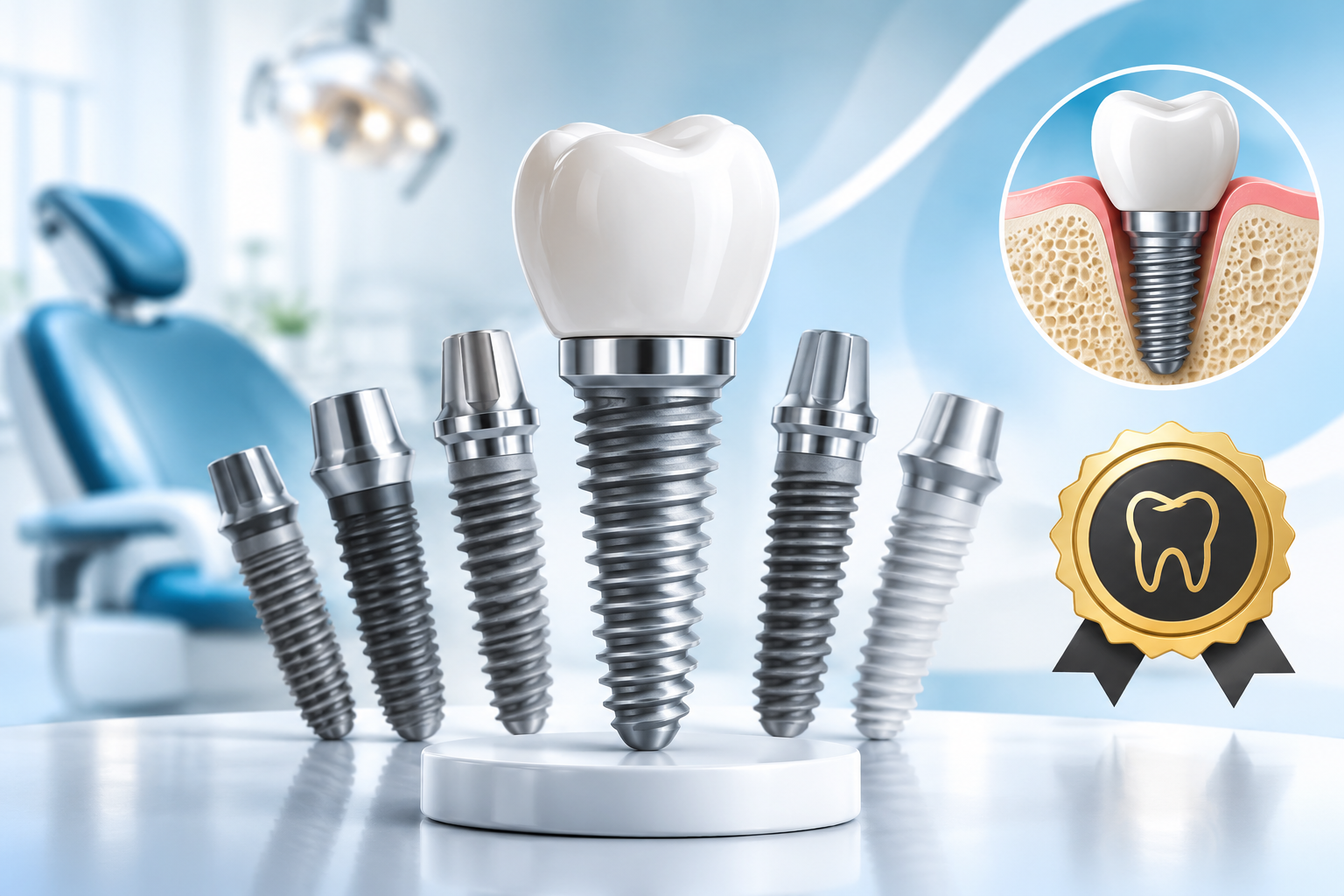
A complete dental implant system generally includes:
Implant Fixture: The component placed inside the jawbone to replace the natural tooth root.
Abutment: The connecting component that supports the final dental restoration.
Implant Screw: Components used to secure different parts of the implant system.
Prosthetic Components: Parts used to connect and support crowns, bridges, or dentures.
Most commonly used dental implants are manufactured using titanium or titanium alloys. Zirconia-based ceramic implants are also available in certain implant systems.
Different dental implant manufacturers offer different implant designs, surface treatments, connection systems, and prosthetic components.
Understanding these differences can help patients make more informed decisions with their dentists.
Top 5 Best Dental Implant Brands in the World
Several established manufacturers offer dental implant systems used by dental professionals internationally.
Here are five well-known dental implant brands worth understanding.
1. Straumann Dental Implants
<underline>Straumann</underline> is a Swiss dental technology company recognized for its implant systems, research, and restorative solutions.
The company offers different implant options designed for various clinical situations, including titanium and ceramic implant solutions.
Key features:
Titanium and ceramic implant options.
Different implant designs for clinical requirements.
Research-supported implant systems.
Digital dentistry and restorative solutions.
A range of prosthetic components.
Straumann is frequently considered by dentists when evaluating established implant systems with extensive clinical documentation.
2. Nobel Biocare Dental Implants
<underline>Nobel Biocare</underline> is a well-established dental implant manufacturer with a long history in implant dentistry.
The company offers implant systems, restorative components, and digital treatment-planning solutions.
Key features:
Different implant designs.
Prosthetic and restorative components.
Digital treatment-planning solutions.
Implant options for different clinical situations.
Extensive published clinical research.
Nobel Biocare is particularly recognized for its contribution to modern implant dentistry and implant-supported restorative solutions.
3. Dentsply Sirona Dental Implants
<underline>Dentsply Sirona</underline> is a global dental technology company offering products and solutions across different areas of dentistry, including implantology.
Its implant portfolio includes systems designed for different bone conditions, surgical requirements, and restorative applications.
Key features:
Different implant system designs.
Restorative and prosthetic components.
Digital dentistry solutions.
Implant planning and workflow technologies.
Options for different clinical requirements.
The availability of specific implant systems and components depends on the market and region.
4. Zimmer Biomet Dental Implants
<underline>Zimmer Biomet</underline> is a medical technology company with a portfolio that includes dental implant systems and restorative components.
Its implant solutions are designed to support different clinical and restorative requirements.
Key features:
Different implant designs.
Titanium implant solutions.
Restorative components.
Implant options for various clinical applications.
Supporting technologies and treatment components.
Zimmer Biomet is another established manufacturer that dental professionals may consider when selecting an appropriate implant system.
5. Osstem Dental Implants
<underline>Osstem</underline> is a South Korean dental implant manufacturer with an international presence.
The company offers different dental implant systems, prosthetic components, and related products used in implant dentistry.
Key features:
Multiple implant system options.
Different implant designs.
Prosthetic and restorative components.
Surgical accessories.
Availability across various international markets.
Osstem is a recognized name in the global dental implant market and is among the manufacturers patients may encounter when exploring implant treatment options.
Which Dental Implant Brand Is the Best?
There is no single dental implant brand that is automatically the best choice for every patient.
An implant system that is suitable for one patient may not be ideal for another. The right choice depends on the patient's dental anatomy, oral health, treatment requirements, and the dentist's clinical judgment.
Before recommending a dental implant, your dentist may evaluate the following factors:
Jawbone Quality: The amount and density of available bone.
Gum Health: Whether the surrounding gum tissues are healthy.
Missing Tooth Location: Whether the implant is being placed in the front or back of the mouth.
Number of Missing Teeth: Whether you need a single implant or multiple implants.
Bite and Chewing Forces: The pressure placed on the implant during chewing.
Medical History: Health conditions that may influence healing.
Lifestyle Habits: Smoking and oral hygiene practices.
Additional Procedures: Whether bone grafting or a sinus lift is required.
Final Restoration: The type of crown, bridge, or denture planned.
Therefore, instead of selecting an implant only because of its brand reputation, discuss the clinical suitability of different implant systems with your dentist.
Does the Dental Implant Brand Affect Treatment Success?
Yes, the implant system is an important consideration, but it is not the only factor responsible for treatment outcomes.
The design, material, surface characteristics, and compatibility of implant components can influence clinical performance.
However, several other factors also play an important role:
Accurate diagnosis and treatment planning.
Proper implant positioning.
The dentist's surgical experience.
Adequate bone support.
Properly designed final restoration.
Healthy gums and surrounding tissues.
Good oral hygiene and regular dental follow-ups.
Even a well-established implant system requires proper clinical planning and maintenance.
A useful question to ask your dentist is not simply, "Which dental implant brand do you use?"
Instead, ask: "Why is this particular dental implant system suitable for my dental condition?"
Titanium vs Zirconia Dental Implants: Which Is Better?
Titanium and zirconia are two materials used in modern dental implant systems.
Both materials have specific properties, and the appropriate option depends on individual clinical requirements.
Titanium Dental Implants
Titanium has been widely used in dental implantology for many years.
Key characteristics:
Extensive history of clinical use.
Biocompatible material.
Available in different implant designs.
Strong and durable.
Supported by substantial clinical research.
Titanium implants are commonly used for replacing missing teeth and supporting different types of dental restorations.
Zirconia Dental Implants
Zirconia is a ceramic material used in certain dental implant systems.
Key characteristics:
Ceramic-based implant material.
Metal-free composition.
White appearance.
Available in selected implant designs.
An option for certain clinical situations.
Zirconia implants may be considered in specific cases depending on the patient's clinical condition and the dentist's assessment.
Titanium vs Zirconia Comparison
Feature | Titanium | Zirconia |
|---|---|---|
Material | Metal | Ceramic |
Appearance | Metallic | White |
Clinical History | Extensive | Comparatively more limited |
Biocompatibility | Yes | Yes |
Implant Options | Widely available | Available in selected systems |
Suitability | Case-dependent | Case-dependent |
Which one should you choose?
Neither material is automatically suitable for everyone. Your dentist can recommend an appropriate implant material after examining your jawbone, gums, aesthetic requirements, and overall oral health.
What Should You Ask Your Dentist Before Choosing a Dental Implant?
Before starting dental implant treatment, it is important to understand the implant system, procedure, expected timeline, and aftercare requirements.
Here are ten questions worth discussing with your dentist.
Which implant brand and model will you use? Understand the manufacturer and specific implant system.
Why is this implant suitable for my case? Ask about the clinical reasons behind the recommendation.
What material is the implant made from? Understand whether it is titanium or zirconia.
Will I need bone grafting or a sinus lift? Some patients require additional procedures before implant placement.
What is the expected healing period? Healing time varies between individuals.
What type of crown will be placed on the implant? Discuss the material and design of the final restoration.
What are the possible risks and complications? Understand the potential limitations of treatment.
How should I maintain my dental implant? Ask about brushing, cleaning, and professional maintenance.
How frequently will I need follow-up appointments? Regular monitoring helps identify potential problems.
Can I receive the implant details for my records? Keep the manufacturer's name, implant model, and relevant documentation.
Having answers to these questions can help you make a more informed decision about your dental implant treatment.
How Long Can a Dental Implant Last?
Dental implants are designed to provide long-term tooth replacement. However, their lifespan varies depending on several clinical and lifestyle factors.
Some important factors that influence implant longevity include:
Daily oral hygiene.
Gum and bone health.
Smoking habits.
General health conditions.
Implant positioning.
Bite pressure and teeth grinding.
Quality of the final restoration.
Regular dental examinations.
One possible complication is peri-implantitis, an inflammatory condition affecting the tissues around a dental implant. If not managed properly, it can lead to supporting bone loss.
To maintain your dental implant:
Brush twice daily using a soft-bristled toothbrush.
Clean between teeth and around implants.
Follow your dentist's professional cleaning recommendations.
Avoid smoking.
Attend regular dental checkups.
Report bleeding, swelling, or discomfort around the implant.
Proper maintenance is essential for protecting the health of your dental implants and surrounding tissues.
Why Is Choosing the Right Dental Implant Dentist Important?
Choosing the right dentist is just as important as understanding the implant manufacturer.
A qualified implant dentist evaluates your oral health, studies your jawbone condition, and develops a treatment plan based on your individual requirements.
Before selecting a dental clinic, consider:
The dentist's qualifications and implant experience.
Diagnostic facilities such as OPG and CBCT.
Treatment planning and surgical protocols.
Implant manufacturer and model.
Quality of restorative materials.
Hygiene and sterilization practices.
Follow-up and maintenance arrangements.
A personalized treatment plan helps ensure that the selected implant system is appropriate for your dental condition.
Final Thoughts: Choosing the Best Dental Implant Brand
When comparing the best dental implant brands, remember that choosing the right system involves more than selecting a popular manufacturer.
Straumann, Nobel Biocare, Dentsply Sirona, Zimmer Biomet, and Osstem are established names in the dental implant industry. Each offers different implant systems and components designed for various clinical applications.
However, the most suitable option depends on your jawbone condition, gum health, treatment requirements, and your dentist's experience with the selected system.
Rather than choosing an implant based only on brand reputation or price, discuss the available options with a qualified implant dentist.
A carefully planned procedure, an appropriate implant system, and consistent oral hygiene can help support long-term treatment outcomes.
Considering dental implants? Schedule a consultation with an experienced dental professional to understand your treatment options and find an implant system suitable for your needs.
Medical Disclaimer
This article is intended for general educational purposes and does not replace professional dental advice, diagnosis, or treatment. The appropriate dental implant system should be selected after an individual clinical examination by a qualified dental professional.
Frequently Asked Questions About Dental Implant Brands
1. Which dental implant brand is the best?
There is no single dental implant brand that is best for every patient. Straumann, Nobel Biocare, Dentsply Sirona, Zimmer Biomet, and Osstem are recognized manufacturers. The right choice depends on your oral health, bone quality, treatment plan, and dentist's experience.
2. Are premium dental implant brands worth it?
Established implant manufacturers may offer extensive clinical documentation, different implant designs, and a range of prosthetic components. However, a higher price does not automatically guarantee a better treatment outcome. Clinical suitability is more important.
3. What are the most popular dental implant brands?
Some well-known dental implant manufacturers include Straumann, Nobel Biocare, Dentsply Sirona, Zimmer Biomet, and Osstem. Each offers different implant systems and restorative components.
4. Are titanium or zirconia dental implants better?
Titanium has a longer history of clinical use, while zirconia is a ceramic alternative available in selected implant systems. The appropriate material depends on your clinical condition, aesthetic requirements, and dentist's recommendation.
5. How do I choose the right dental implant brand?
Ask your dentist about the manufacturer's name, implant model, material, clinical evidence, component availability, and suitability for your dental condition. The dentist's experience and treatment planning are also important.
6. How long do dental implants last?
Dental implants are designed for long-term use, but their lifespan varies. Oral hygiene, gum health, smoking, general health, implant positioning, and regular dental maintenance can influence their longevity.
7. Can I choose my dental implant brand?
You can discuss your preferred implant manufacturer with your dentist. However, the final recommendation should consider your jawbone condition, oral health, treatment requirements, and the dentist's clinical assessment.
Book An Appointment