
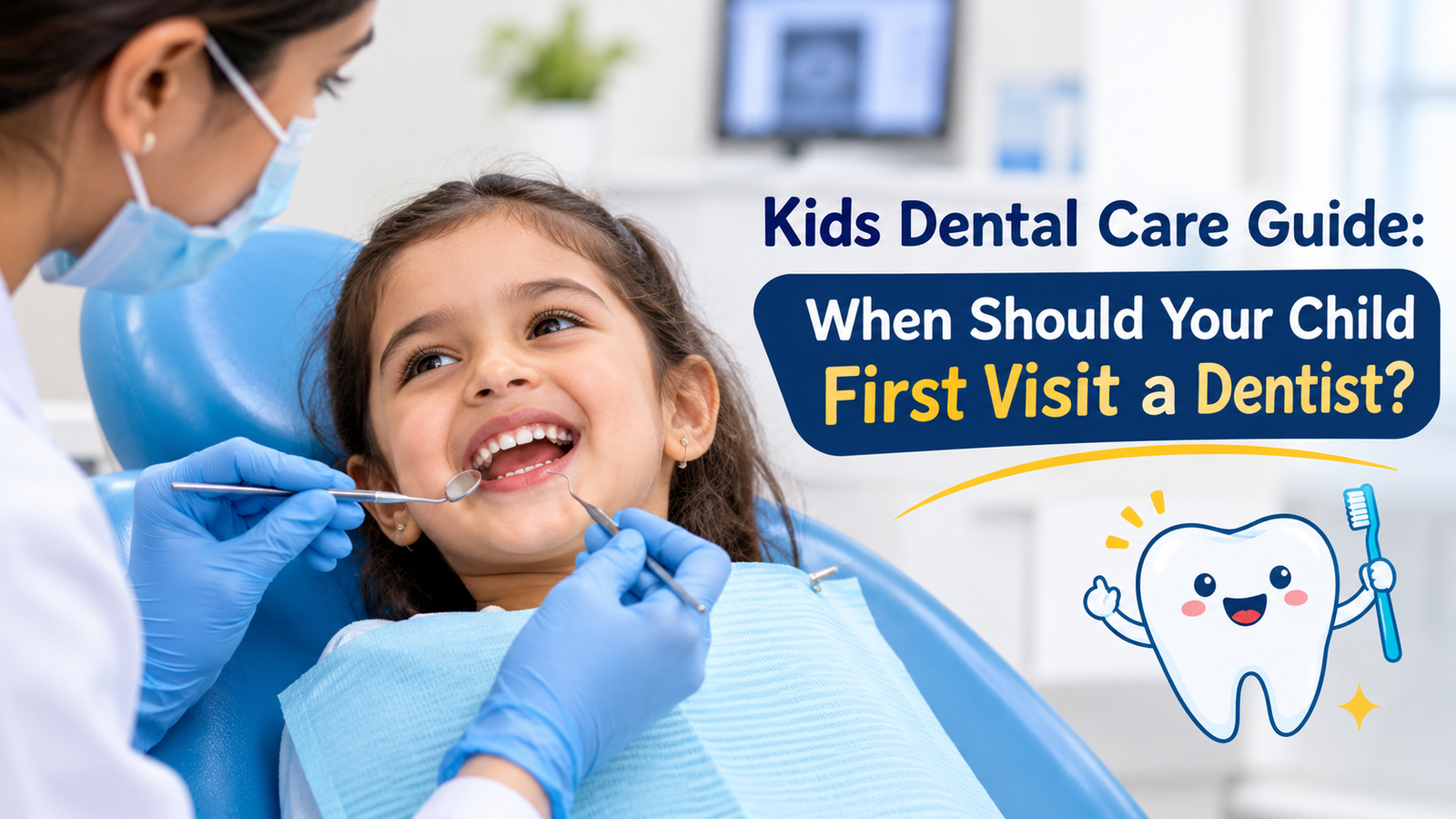
Wondering when your child should first visit a dentist? Most dental experts recommend scheduling a child's first dental visit by their first birthday or within six months of their first tooth appearing. Early dental visits play an important role in maintaining healthy teeth and gums. They help identify potential dental problems, prevent cavities, and develop good oral hygiene habits from an early age. In this Kids Dental Care Guide, we explain the ideal age for a child's first dental appointment, why baby teeth matter, how to prevent cavities, and how parents can protect their children's oral health. If you're looking for reliable kids dental care in Thane, understanding these basics can help you make informed decisions about your child's dental health.
Wondering when your child should first visit a dentist? Most dental experts recommend scheduling a child's first dental visit by their first birthday or within six months of their first tooth appearing.
Early dental visits play an important role in maintaining healthy teeth and gums. They help identify potential dental problems, prevent cavities, and develop good oral hygiene habits from an early age.
In this Kids Dental Care Guide, we explain the ideal age for a child's first dental appointment, why baby teeth matter, how to prevent cavities, and how parents can protect their children's oral health.
If you're looking for reliable kids dental care in Thane, understanding these basics can help you make informed decisions about your child's dental health.
When Should a Child First Visit a Dentist?
A child should visit a dentist by their first birthday or within six months after their first tooth appears.
This recommendation is supported by the American Academy of Pediatric Dentistry (AAPD). Early dental checkups help identify potential problems before they become more serious.
Many parents assume dental visits can wait until all baby teeth appear. However, dental care should begin as soon as the first tooth erupts.
During the first dental visit, the dentist examines:
Tooth development and eruption.
Gum health.
Jaw growth and development.
Oral habits such as thumb-sucking.
Early signs of tooth decay.
A positive first dental experience also helps children become more comfortable with future dental appointments.
Why Is Early Kids Dental Care So Important?
Good oral health starts long before permanent teeth appear.
Many parents believe baby teeth are temporary and therefore less important. However, these small teeth play an essential role in a child's growth and development.
Healthy baby teeth help children:
Chew Food Properly: Healthy teeth help children eat fruits, vegetables, and other nutritious foods comfortably.
Develop Clear Speech: Teeth help the tongue produce several speech sounds correctly.
Maintain Facial Structure: Baby teeth support normal oral development.
Guide Permanent Teeth: They help maintain space for permanent teeth to erupt in the correct positions.
Build Confidence: Healthy teeth contribute to a confident smile and positive social interactions.
Ignoring dental problems in baby teeth can lead to pain, infections, and complications that may affect a child's oral health.
Are Milk Teeth Important?
Yes, milk teeth are extremely important even though they eventually fall out.
Baby teeth act as natural placeholders for permanent teeth. If they are lost too early because of tooth decay or injury, neighbouring teeth may shift into the empty spaces, potentially affecting the alignment of permanent teeth.
Here are three important reasons why milk teeth matter.
1. Support Healthy Nutrition
Children need healthy teeth to chew food properly. Dental problems can make eating uncomfortable and affect their food choices.
2. Help Develop Clear Speech
Proper tooth placement helps children pronounce different sounds. Missing or damaged teeth may sometimes affect speech development.
3. Support Healthy Permanent Teeth
Baby teeth help maintain space for permanent teeth. Taking care of them supports proper dental development.
What Happens During Your Child's First Dental Visit?
The first dental visit is usually quick, gentle, and educational.
The primary goal is to help your child feel comfortable while giving parents useful guidance about maintaining oral health.
A pediatric dentist may:
Examine your child's teeth and gums.
Check bite and jaw development.
Look for early signs of cavities.
Assess oral habits such as thumb-sucking.
Discuss feeding practices and dietary habits.
Demonstrate age-appropriate brushing techniques.
Recommend preventive dental care when necessary.
Parents can also ask questions about teething, fluoride toothpaste, nutrition, and daily oral hygiene.
The appointment duration depends on the child's age, dental needs, and comfort level.
How to Prepare Your Child for Their First Dental Appointment
Preparing your child before the dental appointment can make the experience easier and more comfortable.
Children often respond to their parents' emotions. Staying calm and positive can help your child feel relaxed.
Talk Positively About the Visit
Explain that the dentist helps keep teeth clean, healthy, and strong.
Read Children's Books About Dentists
Storybooks about dental visits can help children understand what happens during an appointment.
Schedule the Appointment Wisely
Choose a time when your child is generally well-rested and comfortable.
Avoid Scary Words
Avoid using words such as pain, needle, or drill when discussing the visit. Instead, focus on healthy teeth and positive experiences.
How Often Should Kids Brush Their Teeth?
Children should brush their teeth twice daily using an age-appropriate amount of fluoride toothpaste.
Regular brushing helps remove plaque and food particles that contribute to tooth decay.
Brushing Guidelines by Age
Birth to Age 3
Use a soft-bristled baby toothbrush.
Use a tiny smear of fluoride toothpaste, approximately the size of a grain of rice.
Brush twice daily.
Parents should perform the brushing.
Age 3 to 6
Use a pea-sized amount of fluoride toothpaste.
Encourage brushing twice daily.
Supervise your child's brushing.
Help them develop proper brushing techniques.
Age 6 and Above
Continue brushing twice daily.
Introduce flossing when teeth touch each other.
Monitor brushing technique.
Encourage independent brushing while supervising as needed.
Parents should assist children with brushing until they develop adequate hand coordination, generally around age seven or eight.
What Is Fluoride and Is It Safe for Children?
Fluoride is a naturally occurring mineral that helps prevent tooth decay.
It strengthens tooth enamel and makes teeth more resistant to acid attacks caused by bacteria and sugary foods.
When used in age-appropriate amounts, fluoride toothpaste is considered safe and effective for children.
Benefits of Fluoride for Kids
Strengthens tooth enamel.
Helps reduce cavity risk.
Supports the repair of early enamel damage.
Protects teeth against acid attacks.
Supports long-term oral health.
Parents should supervise young children while brushing to ensure they use the recommended amount of toothpaste and avoid swallowing it.
How to Prevent Cavities in Kids?
Preventing cavities is easier than treating advanced tooth decay.
Simple daily habits can significantly reduce the risk of dental problems in children.
1. Brush Twice Daily
Regular brushing removes plaque and food particles that contribute to cavity formation.
2. Limit Sugary Foods and Drinks
Frequent exposure to sugary foods and beverages increases the risk of tooth decay.
Try to limit:
Sticky candies.
Sweetened beverages.
Frequent sugary snacks.
Sugary juices.
Chocolates and sweets between meals.
3. Encourage Water Consumption
Drinking water helps rinse away food particles and supports saliva production.
4. Schedule Regular Dental Checkups
Routine dental visits allow the dentist to identify early signs of cavities and recommend preventive care.
5. Establish Healthy Eating Habits
Foods containing calcium, phosphorus, and essential vitamins support healthy teeth and gums.
A balanced diet combined with proper oral hygiene helps build a strong foundation for lifelong dental health.
Common Dental Problems in Children
Children can experience several dental problems while their teeth and jaws are developing.
Parents should understand the common warning signs to ensure timely dental attention.
1. Early Childhood Cavities
Tooth decay in young children can develop due to frequent exposure to sugary foods and drinks, along with inadequate oral hygiene.
White, brown, or dark spots on teeth may indicate early dental problems.
2. Teething Discomfort
Teething usually begins around six months of age.
Children may experience mild gum discomfort, irritability, and increased drooling as their first teeth appear.
3. Thumb-Sucking
Thumb-sucking is common among young children. However, persistent thumb-sucking beyond early childhood may affect tooth alignment and jaw development.
4. Tooth Grinding
Some children grind their teeth during sleep. While this habit may be temporary, persistent grinding should be discussed with a dentist.
5. Misaligned Teeth
Crowded or improperly aligned teeth may become noticeable as children grow.
Early dental monitoring can help identify orthodontic concerns and determine whether further evaluation is needed.
Signs Your Child Should See a Dentist Sooner
Don't wait for the next scheduled dental appointment if you notice unusual changes in your child's teeth or gums.
Contact a pediatric dentist if your child experiences:
Tooth pain or sensitivity.
Swollen or bleeding gums.
White, brown, or dark spots on teeth.
Persistent bad breath.
Difficulty chewing food.
Chipped, broken, or injured teeth.
Changes in tooth alignment.
Discomfort while eating.
Facial swelling accompanied by fever requires urgent dental assessment. Difficulty breathing or swallowing requires emergency medical care.
Early dental evaluation can help identify problems and prevent complications.
Why Choosing a Pediatric Dentist Matters
Pediatric dentists focus on the oral health needs of infants, children, and teenagers.
They understand the different developmental stages of growing teeth and jaws and use age-appropriate approaches to help young patients feel comfortable.
Some benefits of choosing a pediatric dentist include:
Child-friendly dental care.
Experience with children's dental development.
Age-appropriate preventive treatments.
Guidance for parents about oral hygiene.
Early identification of dental problems.
Support for positive dental experiences.
For families looking for a pediatric dentist in Thane, choosing a clinic that understands children's dental needs can make regular dental visits easier.
Kids Dental Care Tips Every Parent Should Follow
Healthy habits developed during childhood can support good oral health throughout life.
Here are some simple kids dental care tips every parent should follow:
Clean your baby's gums even before the first tooth appears.
Schedule the first dental visit by age one.
Brush twice daily with fluoride toothpaste.
Use the correct amount of toothpaste according to age.
Limit sugary snacks and beverages.
Encourage drinking water throughout the day.
Replace toothbrushes approximately every three to four months or sooner if worn.
Schedule regular dental checkups.
Lead by example by maintaining your own oral hygiene routine.
Consistency is more important than perfection. Small daily habits can make a significant difference in your child's dental health.
Frequently Asked Questions About Kids Dental Care
1. When should a child first visit a dentist?
A child should have their first dental visit by their first birthday or within six months after their first tooth appears.
2. How often should children visit the dentist?
Many children benefit from dental checkups approximately every six months. However, the frequency may vary depending on their dental health and cavity risk.
3. Are milk teeth important if they eventually fall out?
Yes. Milk teeth help children chew, speak clearly, maintain space for permanent teeth, and support normal oral development.
4. How can I prevent cavities in my child?
Brush twice daily with age-appropriate fluoride toothpaste, limit sugary foods and drinks, encourage water consumption, and schedule regular dental checkups.
5. What is fluoride and is it safe for children?
Fluoride is a mineral that strengthens tooth enamel and helps prevent cavities. It is safe and effective when used in the recommended age-appropriate amounts.
6. At what age can children brush their teeth independently?
Many children develop sufficient coordination to brush effectively around age seven or eight. Parents should continue monitoring their brushing habits.
7. What should I do if my child is afraid of the dentist?
Use positive language, read dental-themed storybooks, and choose a pediatric dentist experienced in working with children.
8. How long should children brush their teeth?
Children should brush for approximately two minutes, twice daily, using fluoride toothpaste.
Final Thoughts: Build Healthy Smiles with Early Kids Dental Care
A healthy smile begins with good habits developed during childhood.
From scheduling the first dental visit to teaching proper brushing techniques, parents play an important role in protecting their children's oral health.
Regular dental checkups, balanced nutrition, and consistent oral hygiene can help prevent cavities and support healthy tooth development.
At Dr Rai Dental Avenue, Thane, children can receive dental evaluations and age-appropriate care based on their individual oral health needs.
If you're looking for kids dental care in Thane or a pediatric dentist for your child, early dental attention can be an important step towards maintaining healthy teeth and gums.
Book Your Child's Dental Consultation Today
Is your child ready for their first dental visit?
Don't wait for tooth pain or cavities to appear. Schedule a dental consultation at Dr Rai Dental Avenue, Thane, to understand your child's dental health and preventive care requirements.
Give your child the foundation for a healthy smile that lasts a lifetime.
Book An Appointment