Painless Root Canal Treatment in Thane

Save Your Natural Tooth with Advanced Care

Root canal treatment is a dental procedure used to treat infection inside the tooth and relieve severe pain. At our clinic, we provide painless root canal treatment using advanced technology and gentle techniques to ensure a comfortable experience.

Our goal is to remove infection, preserve your natural tooth, and restore your oral health
efficiently.
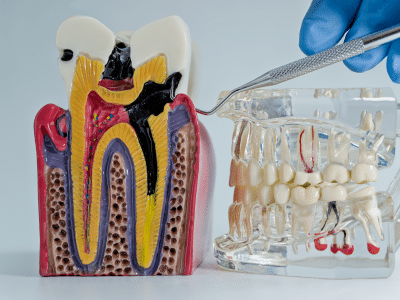

What is Root Canal Treatment?

Root canal treatment (RCT) involves removing the infected pulp inside the tooth, cleaning and disinfecting the root canals, and sealing the tooth to prevent further infection. This procedure helps save the natural tooth and eliminate pain, avoiding the need for tooth extraction.

Signs You May Need a Root Canal

You may need root canal treatment if you experience

  • Persistent tooth pain
  • Sensitivity to hot or cold
  • Pain while chewing or biting
  • Swollen or tender gums
  • Tooth discoloration


    If you notice these symptoms, it is important to seek dental care early
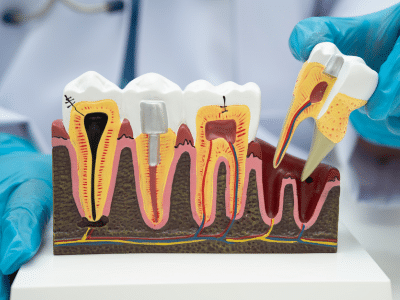
Why Choose Our Painless Root Canal Treatment?

We ensure that your treatment is comfortable, efficient, and focused on long-term dental
health

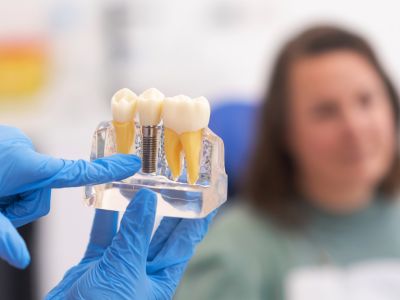
A person wearing blue gloves holds a dental model displaying teeth and Dental Implants, while another individual is blurred in the background.

Dental Implants Saga: Bridging the Gap with Perfect Smiles
Dental implants are a solution to missing teeth and are very popular in India. These implants are surgically placed in the jaw and provide a solid base for the prosthesis, improving function and aesthetics. As a first choice, dental implants offer a durable and beautiful alternative to tooth replacement procedures.
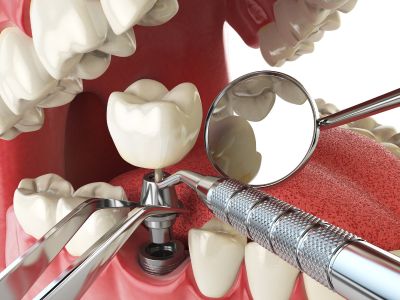
A close-up illustration of Dental Implants being placed in the lower jaw, with dental tools and a mirror used to assist during the procedure.

What are Dental Implants?

Dental implants are a dental procedure that involves placing titanium into the jawbone to support dentures. The best solution for missing teeth in India is permanent and long-lasting. With great cosmetic results, dental implants have become a popular option and offer a great, long-lasting option to restore your smile.
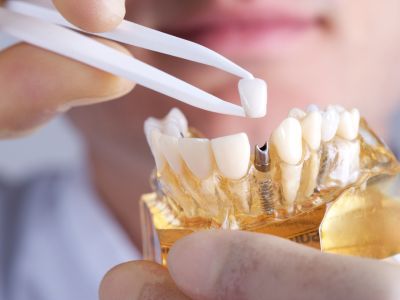
A person uses tweezers to place a dental crown onto a model of human teeth, demonstrating a dental restoration or procedure such as fitting crowns over Dental Implants.

Why do you need Dental Implant?

Dental implants in India are important to solve the problem of missing teeth. In addition to being cosmetic, implants preserve the integrity of the jaw and support the facial structure. This solution improves oral function, promotes good speech and comfortable chewing. Dental implants have a long-term impact on overall health and have become an important part of dental care in India.

Advantages of Dental Implants

Dental implants in India offer alternatives that provide stability and beauty. Combining modern innovations with timeless wisdom, realizing the benefits of long-term work and smiling face.

FREQUENTLY ASKED QUESTIONS
What are dental implants?
+
Dental implants are titanium posts surgically placed into the jawbone to replace missing tooth roots. They support artificial teeth (crowns, bridges, or dentures) that look and function like natural teeth.
Who is a good candidate for dental implants?
+
Good candidates are adults with one or more missing teeth, healthy gums, and enough jawbone density. Your dentist will assess bone quality and overall oral health before treatment.
Are dental implants painful?
+
The procedure is performed under local anesthesia, so you shouldn’t feel pain during surgery. Mild discomfort or soreness is common afterward and can be managed with medications.
How long does the dental implant process take?
+
Dental implant treatment can take several months because the implant must fuse with the jawbone (osseointegration). Healing time varies based on individual healing and whether bone grafting is needed.
How long do dental implants last?
+
With good oral hygiene and regular dental check-ups, dental implants can last for many years — often decades or even a lifetime.
Is the dental implant surgery safe?
+
Yes, dental implant procedures are considered safe and highly successful when performed by experienced specialists. Complications are rare but may include infection, nerve injury, or sinus issues.
Do I need bone grafting before getting implants?
+
Bone grafting may be recommended if your jawbone lacks sufficient density to support the implant. Your dentist will evaluate this during planning with X-rays or 3D scans
How should I care for my dental implants?
+
Implants require the same care as natural teeth — regular brushing, flossing, and dental check-ups. Avoid hard foods and follow your dentist’s aftercare instructions for long-term success.
How much do dental implants cost in Thane?
+
The cost depends on factors like the number of implants, implant type, materials used, and any additional procedures (e.g., bone grafts). A consultation with your dentist will give you an accurate estimate.
FREQUENTLY ASKED QUESTIONS

Root Canal Treatment FAQs

When do I need a root canal treatment?
+
You may need a root canal treatment if you experience severe tooth pain, prolonged sensitivity to hot or cold, swelling in the gums, or signs of infection such as pus or a pimple-like bump near the tooth. These symptoms usually indicate that the inner pulp of the tooth is infected and requires timely treatment to prevent further complications.
Is root canal treatment painful?
+
Root canal treatment is not painful with modern dental techniques. The procedure is performed under local anesthesia, ensuring that you remain comfortable throughout. Most patients report that it feels similar to getting a regular filling, and the treatment actually relieves the pain caused by the infection.
How long does a root canal treatment take?
+
The duration of a root canal treatment typically ranges from 30 to 90 minutes, depending on the complexity of the case and the number of canals in the tooth. In many cases, the procedure can be completed in a single visit, while more complicated infections may require two appointments.
Can a root canal save my natural tooth?
+
Yes, the primary goal of root canal treatment is to save your natural tooth. By removing the infected pulp and sealing the tooth, the structure is preserved, allowing you to maintain normal chewing function and avoid tooth extraction.
What happens after a root canal treatment?
+
After the procedure, you may experience mild sensitivity or discomfort for a few days, which is normal and temporary. A dental crown is usually recommended to protect and strengthen the treated tooth, especially in the case of molars, ensuring long-term durability.
How long does a root canal treated tooth last?
+
A tooth that has undergone root canal treatment can last for many years or even a lifetime with proper care. Maintaining good oral hygiene and attending regular dental check-ups plays a crucial role in the longevity of the treated tooth.
Is root canal better than tooth extraction?
+
In most cases, saving the natural tooth with a root canal is considered better than extraction. It helps preserve the natural alignment of your teeth, maintains jawbone health, and eliminates the need for replacement options such as implants or bridges.
What is the cost of root canal treatment in Thane?
+
The cost of root canal treatment in Thane can vary depending on the severity of the infection, the type of tooth involved, and whether additional procedures like a crown are required. A detailed consultation will provide an accurate estimate based on your specific condition.
Do I need a crown after root canal treatment?
+
In most cases, a crown is recommended after a root canal to restore the strength and function of the tooth. This is particularly important for back teeth, which endure more chewing pressure and are more prone to fracture.
Can I eat normally after a root canal?
+
After the procedure, it is advisable to wait until the numbness wears off before eating. Soft foods are recommended initially, and once the final restoration such as a crown is placed, you can resume normal eating habits comfortably.
Scroll to Top