
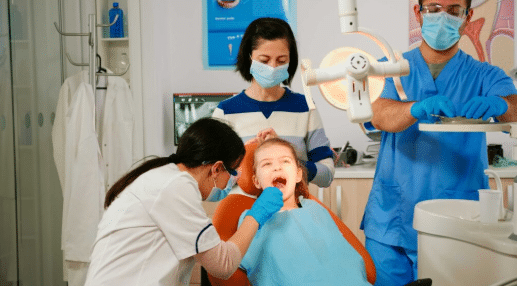
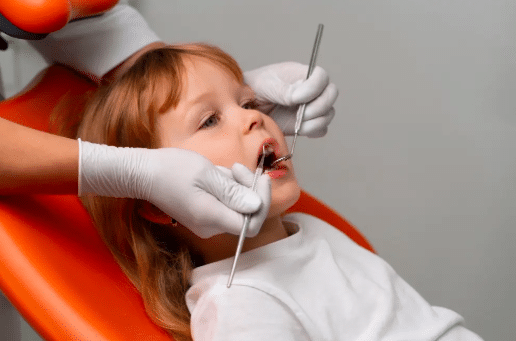
The first appointment is usually simple, gentle, and focused on prevention rather than treatment.
A pediatric dentist will typically:
- Examine your child’s teeth and gums
- Check jaw and bite development
- Look for early signs of cavities
- Discuss teething and thumb sucking
- Demonstrate proper brushing techniques
- Answer parents’ questions about oral hygiene and diet
The appointment is generally short and designed to make your child feel comfortable in the dental environment.
How Can Parents Prepare Their Child for the First Dental Visit?
A positive introduction to the dentist can reduce fear and build lifelong confidence.
Here are a few simple tips:
- Schedule the appointment when your child is well-rested.
- Talk positively about visiting the dentist.
- Avoid using words like “pain,” “needle,” or “hurt.”
- Read children’s books about dental visits.
- Let your child bring a favorite toy for comfort.
Children often take cues from their parents, so staying calm and encouraging helps create a pleasant experience.
How Should You Care for Your Child’s Teeth at Home?
Good oral hygiene starts long before all the teeth appear.
Before the First Tooth
Clean your baby’s gums using a soft, damp cloth after feeding.
After the First Tooth Appears
Brush twice daily using a soft-bristled toothbrush.
Use a small smear of fluoride toothpaste for children under three years and a pea-sized amount after age three, unless your dentist recommends otherwise.
Parents should supervise brushing until children develop enough hand coordination, usually around the age of seven or eight.
Every child has unique dental needs, so regular visits to a pediatric dentist are important. A pediatric dentist can provide personalized guidance on brushing, flossing, diet, fluoride use, and age-appropriate oral care routines based on your child’s dental development. They can also identify potential issues early and recommend preventive treatments to help maintain healthy teeth and gums as your child grows.
What Foods Help Maintain Healthy Teeth?
A balanced diet supports strong teeth and healthy gums.
Encourage your child to eat:
- Fresh fruits
- Vegetables
- Cheese
- Yogurt
- Milk
- Eggs
- Whole grains
Limit:
- Sugary drinks
- Sticky candies
- Chocolate between meals
- Frequent snacking
- Sweetened juices
Water is the best drink between meals and helps rinse away food particles.
What Are the Signs Your Child Should See a Pediatric Dentist?
Don’t wait for pain before scheduling a dental appointment.
Visit a pediatric dentist if you notice:
- Tooth pain
- White or brown spots on teeth
- Bleeding gums
- Swollen gums
- Bad breath that doesn’t improve
- Broken or chipped teeth
- Difficulty chewing
- Delayed tooth eruption
Early treatment is usually simpler, less expensive, and more comfortable for children.
Common Dental Problems in Children
Tooth Decay
Tooth decay is one of the most common childhood conditions worldwide. It develops when bacteria feed on sugars and produce acids that erode and damage the teeth.
Thumb Sucking
Thumb sucking is common in infants and young children. However, if the habit continues beyond the preschool years, it may cause the front teeth to protrude and affect normal jaw development, increasing the risk of bite problems as your child grows.
Early Tooth Loss
Premature loss of baby teeth can cause the surrounding teeth to shift and reduce the space needed for permanent teeth. It may also lead to the early eruption of permanent teeth before the jaw has developed enough, increasing the risk of crowding or misaligned teeth.
Teeth Grinding
Some children grind their teeth while sleeping. While many outgrow this habit, persistent teeth grinding may be linked to factors such as airway issues, nutritional deficiencies, or other underlying conditions and should be evaluated by a dentist to determine the cause and recommend appropriate treatment.
Tips to Prevent Cavities in Children
Preventing cavities is much easier than treating them.
Follow these simple habits:
- Brush twice every day.
- Floss once teeth begin touching.
- Visit the dentist every six months.
- Encourage drinking water after meals.
- Replace toothbrushes every three months.
- Avoid putting babies to sleep with milk or juice bottles.
Consistency is the key to excellent child dental care.
Quick Facts Every Parent Should Know
- The first dental visit should happen by age one or within six months of the first tooth erupting.
- Baby teeth help guide permanent teeth into the correct position.
- Fluoride toothpaste helps prevent cavities when used in the recommended amount.
- Regular dental check-ups allow dentists to detect problems before they become painful.
- Healthy eating habits significantly reduce the risk of tooth decay.
- Early positive dental experiences help children develop lifelong confidence in dental care.

Why Choose a Pediatric Dentist?
A pediatric dentist receives specialized training to care for infants, children, and teenagers. Their clinics are designed to create a child-friendly environment, making dental visits less stressful and more enjoyable.
They also understand children’s behavior, growth, and oral development, allowing them to provide personalized treatment based on your child’s age and needs.
FAQs
How often should children visit the dentist?
Most children should have a dental check-up every six months. Your dentist may recommend more frequent visits if your child has a higher risk of cavities.
Are baby teeth really that important?
Yes. Baby teeth help children eat, speak, and guide permanent teeth into the correct position.
What age should children start brushing?
Parents should begin cleaning the gums before the first tooth appears and start brushing as soon as the first tooth erupts.
Is thumb sucking harmful?
Thumb sucking is normal during infancy. If it continues beyond four to five years of age, consult your pediatric dentist to prevent possible dental alignment issues.
Final Thoughts
Building healthy dental habits starts early. Scheduling your child’s first dental visit by their first birthday allows potential problems to be detected before they become serious. Combined with daily brushing, healthy eating habits, and regular check-ups, early kids dental care helps ensure a lifetime of healthy smiles.
If you’re looking for compassionate, expert child dental care, don’t wait until your child experiences pain. Regular visits to a qualified pediatric dentist can make all the difference in maintaining your child’s oral health and confidence.
Book an Appointment today and give your child the best start toward a healthy, beautiful smile.